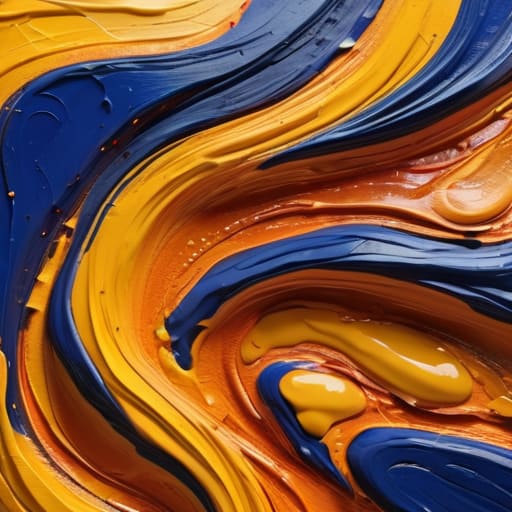
I remember sitting in a cramped studio at RISD, the air thick with the scent of turpentine and old linseed oil, staring at a canvas that felt more like a battlefield than a masterpiece. I used to think that abstract expressionism was just an excuse for artists to throw a tantrum with a bucket of paint and call it “subconscious truth.” I spent years trying to force that same kind of uncontrolled chaos into my design work, only to realize that I was just chasing a ghost. There is a massive difference between mindless splashing and the intentional, heavy friction of a hand trying to communicate something that words simply cannot reach.
In this piece, I’m stripping away the academic pretension and the lofty, confusing jargon that usually surrounds the movement. I want to talk to you about the actual visceral mechanics of the work—how it connects to our need for human touch in an increasingly automated world. I won’t give you a history lecture; instead, I’ll share what I’ve learned about finding purposeful movement within the mess. We’re going to look at how this style can actually inform your creative process, rather than just serving as a decorative distraction.
Table of Contents
The Raw Impulse of Subconscious Creativity in Painting
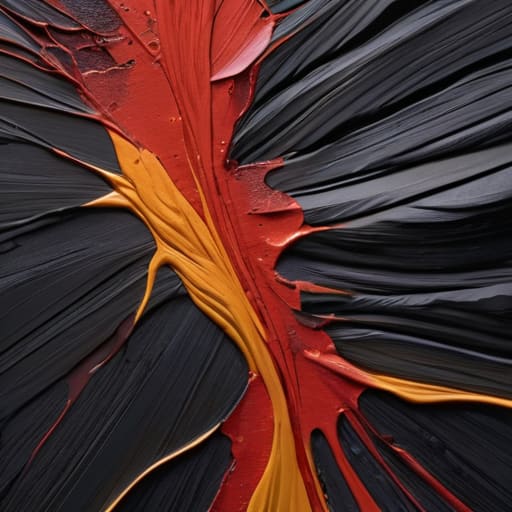
When I sit down with my sketchbook, I’m often searching for that same uninhibited flow that defined the New York School artists. They weren’t interested in the polite, structured compositions we often see in commercial design; they wanted to tap directly into the nervous system. This wasn’t about planning a layout or adhering to a grid. It was about the sudden, violent necessity of a mark. In the context of subconscious creativity in painting, the canvas becomes a site of psychological release rather than a mere surface for decoration.
There is a specific kind of bravery required to embrace action painting techniques, where the physical movement of the body dictates the rhythm of the work. It’s a messy, unpredictable process that stands in stark contrast to the sterile perfection of modern digital tools. When you watch a recording of these artists at work, you realize they weren’t just applying pigment; they were documenting a moment of existence. It’s that raw, unmediated impulse—the ability to let the hand move faster than the analytical mind can intervene—that gives the work its enduring, visceral power.
How New York School Artists Reclaimed the Human Touch
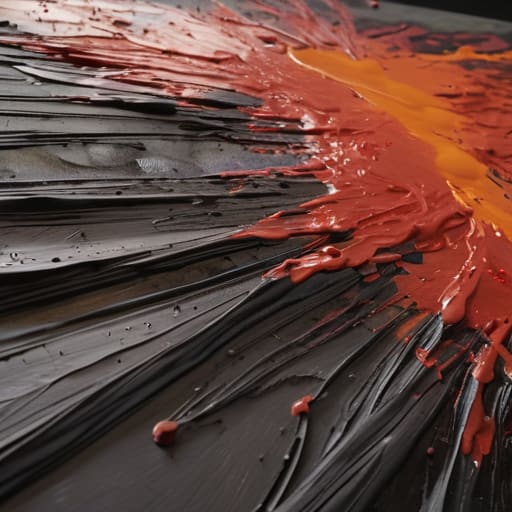
To understand why this shift was so radical, you have to look at the wreckage of the era. The New York School artists weren’t just playing with shapes; they were reacting to a world that felt fundamentally broken. Following the devastation of World War II, the traditional modes of representation felt hollow, even dishonest. There was a desperate need to find a language that didn’t rely on the polite structures of the past. By pivoting toward action painting techniques, these creators turned the canvas into an arena rather than a mere surface. It wasn’t about the finished image as much as it was about the physicality of the struggle—the drips, the sweeps, and the sheer kinetic energy of a human being asserting their presence in a chaotic world.
This wasn’t just a stylistic pivot; it was a reclamation of agency. Whether through the frantic gestures of Pollock or the meditative expanses of color field painting, there was a shared commitment to something visceral. They moved away from the “calculated” and leaned heavily into the unpredictable. In my own work with type design, I find myself constantly returning to this idea: that perfection is often the enemy of connection. These artists understood that true resonance comes from the tension between control and chaos.
Embracing the Friction: How to Channel Expressionist Intent
- Stop aiming for precision. In my studio, I’ve learned that the moment you try to control every drop of ink or stroke of a brush, you lose the soul of the piece. Let the medium resist you; that’s where the truth lives.
- Prioritize the gesture over the result. Instead of staring at the canvas waiting for a “perfect” shape, focus on the physical movement of your arm and the weight of your hand. The movement should dictate the mark, not your analytical brain.
- Value the “productive mistake.” When a drip runs where it shouldn’t or a color bleeds unexpectedly, don’t reach for the eraser. Treat it as a collaborator. In a world of undo buttons, learning to work with an error is a radical act of presence.
- Build a relationship with your tools. Whether it’s a heavy palette knife or a worn-out brush, understand how they fight back. The friction between the tool and the surface is what creates texture that a digital gradient can never replicate.
- Embrace the silence between marks. Abstract expressionism isn’t just about chaos; it’s about knowing when to stop. Leave space for the viewer to breathe and find their own meaning within the tension of your composition.
The Lessons of the Uncontrolled Stroke
Abstract expressionism reminds us that perfection is often the enemy of truth; there is a profound, necessary honesty in the marks that aren’t polished or calculated.
True creativity requires a willingness to embrace friction and unpredictability, rather than smoothing every edge to fit a pre-defined digital grid.
We must protect the “human error” in our work, as it is the very thing that connects a creator’s internal impulse to the viewer’s emotional response.
The Ghost in the Machine
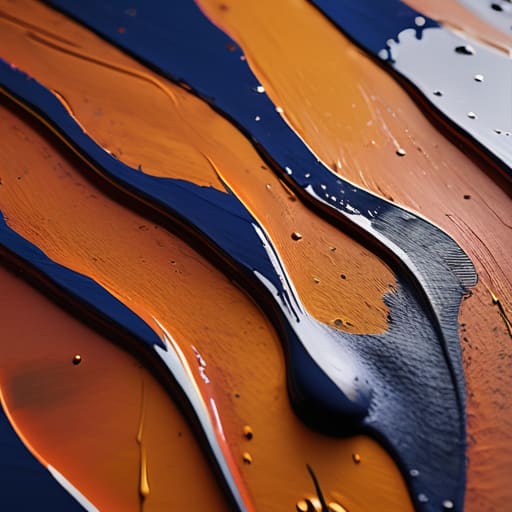
In an era where we can generate perfect, frictionless pixels with a single click, Abstract Expressionism reminds us that there is profound, necessary value in the tremor of a hand and the messiness of a real, uncurated impulse.
Ingrid Bellamy
The Ghost in the Machine
When we look back at the New York School, it isn’t just about the scale of the canvases or the chaos of the drips; it is about the reclamation of the self. Abstract expressionism taught us that the unfiltered impulse—the messy, uncoordinated, and deeply personal gesture—is what gives art its gravity. By moving away from representational perfection and leaning into the subconscious, these artists proved that there is a profound logic in what looks like disorder. They didn’t just paint shapes; they mapped the internal friction of being alive, ensuring that the artist’s presence remained visible long after the paint had dried.
As someone who spends my days navigating the seamless, frictionless world of digital interfaces, I find myself constantly returning to this era for a sense of grounding. In an age where algorithms can mimic style with terrifying precision, the lesson of abstract expressionism remains vital: perfection is often the enemy of truth. We must strive to keep the human hand present in everything we create, whether it is a stroke of oil on linen or a carefully kerned typeface on a screen. Let us not aim for the sterile ease of automation, but rather for the intentional imperfection that reminds the viewer there is a soul behind the work.
Frequently Asked Questions
How do we distinguish between genuine, intentional abstraction and mere visual noise?
It comes down to intention. Visual noise is accidental; it’s what happens when a designer leans too hard on a filter or a generator without a plan. Genuine abstraction, however, has a structural integrity. Even in its most chaotic state, you can feel the weight of a decision behind every stroke. It’s the difference between a smudge left by a mistake and a mark made to command the viewer’s eye. One is clutter; the other is communication.
In an age of digital perfection, can the "accidents" of abstract expressionism still be replicated through modern tools?
We can simulate the look of an accident, but we can’t simulate the intent behind it. Digital tools are designed to eliminate error, to smooth out the jagged edges until everything feels sanitized and predictable. You can apply a “grain” filter or a “splatter” brush, but that’s just math masquerading as chaos. True abstraction requires the risk of failure—the physical tension of a hand losing control. You can’t program the soul of a mistake.
Is the movement's focus on individual psyche still relevant in our increasingly interconnected, algorithmic world?
It’s more relevant than ever. We’re currently drowning in a sea of “perfect” algorithmic outputs—smooth, predictable, and entirely devoid of soul. When an engine can mimic a style, the only thing left with true value is the messy, irrational impulse of the individual psyche. Abstract expressionism reminds us that the friction of a human mind—with all its contradictions and neuroses—is exactly what prevents digital culture from becoming a sterile, endless loop.
