I remember the smell of rubber cement and the specific, tactile resistance of a X-Acto blade cutting through heavy cardstock back in my RISD days. There was a certain tension in those physical paste-ups, a sense that every decision carried weight because you couldn’t just hit `Cmd+Z` to undo a mistake. Today, I see so many designers drowning in “optimized” workflows and endless software subscriptions, chasing a version of the creative process that feels more like data entry than actual making. We’ve traded the meaningful friction of craftsmanship for a frictionless, automated void that often leaves the soul of the work behind.
I’m not here to sell you on a new productivity app or a complex, ten-step framework that requires a subscription to function. Instead, I want to talk about how we reclaim intentionality in our work. I’m going to share the hard-won lessons I’ve gathered from two decades of navigating the shift from analog to digital, focusing on how to build a creative process that actually honors your intuition. We’re going to strip away the digital noise and get back to the core of why we create: to build things that matter.
Table of Contents
Mastering the Stages of Creativity Through Intentional Design
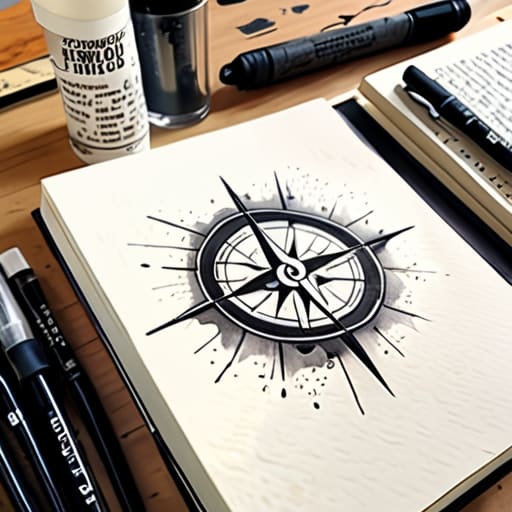
I’ve always found that the most productive way to navigate the different stages of creativity is to stop treating them like a linear assembly line. When I’m working on a new typeface or a brand identity, I have to consciously oscillate between two very different mental states. First, there is the expansive, messy phase of divergent vs convergent thinking. This is where I allow myself to make mistakes—the kind of beautiful, unpolished errors you only get when you let the pen wander across a physical page without the safety net of “undo.”
Once the chaos has settled, the work shifts toward refinement. This is where artistic workflow optimization becomes vital; it’s the transition from the wild energy of an idea to the disciplined execution of a professional. I try to guard this transition carefully. If you rush from the spark of an idea straight into the digital grid, you lose the soul of the work. You end up with something technically perfect but entirely hollow. True mastery lies in knowing exactly when to lean into the mess and when to apply the rigorous constraints that turn a concept into a lasting piece of design.
Balancing Divergent vs Convergent Thinking to Empower Expression
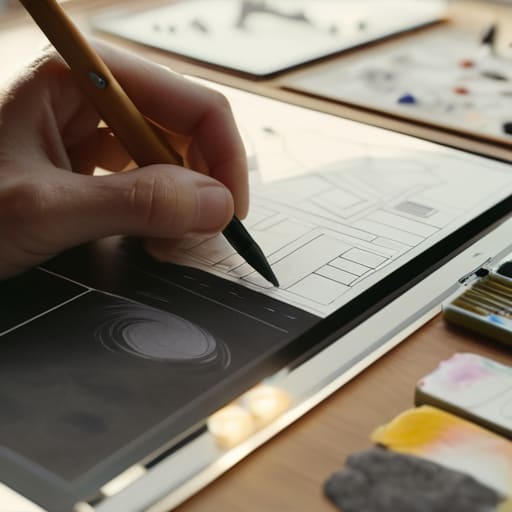
In my years of transitioning from drafting tables to digital canvases, I’ve noticed that most designers struggle not with a lack of ideas, but with a lack of structure. We often fall into the trap of trying to edit while we are still exploring, which is a recipe for stagnation. To truly master your artistic workflow optimization, you have to learn to toggle between two distinct mental gears. First, there is the expansive, messy phase of divergent thinking—where you let the ideas bleed into one another without judgment. This is where you allow for the “happy accidents” that a rigid grid might otherwise stifle.
Once the chaos has settled, you must pivot to convergent thinking. This is the disciplined act of pruning the wild branches to find the single, most elegant solution. It’s the difference between a sketchbook full of scribbles and a finished typeface that carries weight and intention. Understanding the tension between divergent vs convergent thinking is essential for creative mindset development; if you stay in the divergent phase too long, you’ll never ship a project, but if you converge too early, you’ll likely produce something derivative and safe.
The Tactile Edge: Five Ways to Protect Your Process
- Protect your analog time. I’ve found that the most breakthrough ideas rarely happen while staring at a high-resolution monitor; they happen when I’m working through a problem with a fountain pen and a heavy paper stock. Give yourself permission to step away from the pixels to find the soul of the project.
- Embrace the mess of the middle. There is a tendency in modern design to aim for immediate polish, but the “ugly phase” of a creative process is where the real discovery lives. Don’t rush to clean up your sketches until you’ve actually interrogated the friction within them.
- Curate your inputs, not just your outputs. If you spend all day scrolling through hyper-sanitized, algorithm-driven design feeds, your work will start to look like everyone else’s. Look toward architecture, old film photography, or even the way light hits a street corner to find genuine inspiration.
- Build constraints into your workflow. Total freedom is often just a polite way of saying “paralysis.” By setting strict parameters—whether it’s a limited color palette or a specific grid system—you force your brain to work harder and find more elegant, intentional solutions.
- Audit your tools for utility, not novelty. Just because a new software update offers a flashy AI shortcut doesn’t mean it serves your craft. Ask yourself: Is this tool helping me express a specific idea, or is it just making it easier to produce mediocre work faster?
The Essence of Intentional Craft
Stop chasing frictionless speed; instead, build intentional pauses into your workflow that allow for the kind of deep, messy thinking that automation simply can’t replicate.
True creative mastery requires the discipline to oscillate between the chaos of divergent ideas and the rigor of convergent decision-making without losing your soul to either.
Design your processes to serve the creator, not the output—ensure your tools act as an extension of your hand rather than a replacement for your judgment.
The Weight of Intent
A creative process shouldn’t feel like a frictionless slide toward a finished file; it needs the resistance of real thought, the messy friction of trial and error, and the quiet discipline of knowing when to stop polishing and start breathing life into the work.
Ingrid Bellamy
The Intentional Path Forward

We’ve looked at how the creative process isn’t a straight line, but a rhythmic cycle of expansion and refinement. From mastering the distinct stages of design to navigating the delicate tension between divergent exploration and convergent decision-making, the goal remains the same: to move with purpose. It is easy to get lost in the endless loop of digital iterations, but true mastery comes when we stop treating our tools as magic buttons and start treating them as extensions of our own deliberate intent. By balancing these mental shifts, we ensure that our work isn’t just a collection of polished pixels, but a cohesive expression of a well-navigated journey.
As you step back to your desk—whether you’re reaching for a stylus or a fountain pen—remember that the friction you feel is often where the best work lives. Don’t fear the messy middle or the moments where the process feels slow; that resistance is simply the sound of craftsmanship taking root. Our task is to build workflows that protect that human element, ensuring that technology serves the vision rather than dictating it. Keep your eyes sharp, your process disciplined, and never lose sight of the soul behind the screen. That is where real design begins.
Frequently Asked Questions
How do I keep the creative momentum going when the transition from divergent brainstorming to convergent execution feels more like a loss of magic than a refinement of ideas?
That “loss of magic” is actually just the friction of reality setting in. When you move from the infinite possibilities of brainstorming to the constraints of execution, it feels like you’re killing the idea. But think of it like developing film: the magic isn’t lost in the darkroom; it’s being distilled. Stop viewing constraints as cages. Instead, treat them as the structural bones that allow your wildest concepts to finally stand up and breathe.
In an age of instant digital gratification, how can I build "productive friction" into my workflow without letting it become a bottleneck that kills my efficiency?
The trick is to apply friction where it matters—the conceptual stage—and automate where it doesn’t. I never touch my mouse during the initial ideation; I use my sketchbook and a fountain pen. That physical resistance forces me to slow down and actually think. Once the logic is sound, I move to the digital tools for the heavy lifting. Don’t fight the speed of software; just refuse to let it dictate your thinking.
How do I protect the intentionality of my original vision when I'm forced to adapt my process to the rigid constraints of client feedback and automated design tools?
I’ve been there—feeling that original spark get smothered by a spreadsheet of feedback or a template that demands conformity. To protect your vision, you have to treat your “why” as a non-negotiable anchor. Document the rationale behind your core decisions early. When a tool or a client pushes you toward the path of least resistance, point back to that intent. Don’t just defend a look; defend the purpose the design serves.
