
I remember sitting in a dimly lit studio back in the late nineties, the air thick with the scent of spray mount adhesive and the rhythmic thwack of a X-Acto blade hitting a cutting mat. We weren’t chasing algorithms then; we were chasing the way a human eye naturally rests on a page. Today, I see “user centered design” being treated like some high-priced, mystical ritual performed by agencies charging six figures to move a button three pixels to the left. It has become a sterile, corporate buzzword that often ignores the very thing it claims to protect: the unpredictable, messy reality of how people actually live and work.
I’m not here to give you a polished lecture on theoretical frameworks or a checklist of industry jargon. Instead, I want to pull back the curtain on what it actually means to build with intention. We are going to strip away the hype and look at how to apply user centered design through the lens of craftsmanship and empathy. I promise to share the hard-won lessons I’ve gathered from decades of moving between ink and pixels, focusing on how we can create digital tools that respect the human hand rather than just filling up empty space.
Table of Contents
Honoring the Human Touch Through User Centric Interface Design

When we talk about user-centric interface design, we aren’t just talking about moving buttons around until they look “clean.” We are talking about acknowledging the physical and cognitive reality of the person on the other side of the glass. In my years of moving from the tactile world of Letraset to the seamlessness of Figma, I’ve noticed a dangerous trend: we are designing for perfection rather than for human imperfection. A truly intuitive interface doesn’t just follow a checklist; it anticipates the slight hesitation of a cursor or the fatigue of a user navigating a complex workflow.
To achieve this, we have to embrace a rigorous iterative design process. This means moving beyond the initial polished mockup and actually testing how a human interacts with the friction of the tool. It’s about prototyping and validation that prioritizes real-world behavior over theoretical ease. If we rely solely on automated layouts, we lose the soul of the craft. We must build interfaces that feel like an extension of the creator’s intent, ensuring that every interaction feels earned rather than accidental.
Applying Design Thinking Methodology to Empower the Creator
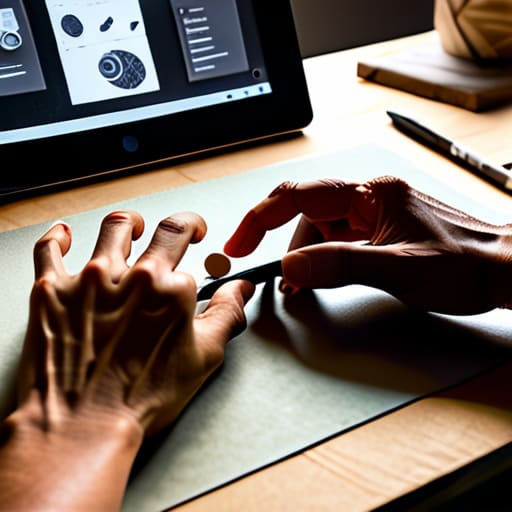
When we talk about the design thinking methodology, it’s easy to get lost in the abstract frameworks and sticky-note sessions. But for me, it has always been about the transition from theory to the tactile reality of how a person actually interacts with a tool. It isn’t about following a rigid checklist; it’s about using that structure to empathize with the person on the other side of the screen. We need to move past the “perfect” initial concept and embrace the messy, necessary reality of an iterative design process.
True empowerment happens when we stop treating the user as a data point to be optimized and start treating them as a craftsman to be supported. This means prioritizing prototyping and validation not just to catch bugs, but to understand the rhythm of a creator’s workflow. If a tool feels too slick, too frictionless, or too automated, it often loses the very soul of the work. We aren’t just building interfaces; we are building the digital equivalent of a well-balanced fountain pen—something that feels like an extension of the hand, rather than a barrier to it.
Five Ways to Bring Intentionality Back to the Interface
- Stop designing for “users” and start designing for people. When I’m sketching out a new typeface or a brand system, I don’t think about clicks; I think about the person sitting in a dimly lit room at 2 AM. Build for their context, their fatigue, and their actual environment, not for a perfect, sterile laboratory setting.
- Respect the friction. We’ve become obsessed with “frictionless” design, but sometimes a little resistance is necessary to ensure intentionality. A confirmation step or a deliberate transition can prevent mistakes and give a creator the moment they need to breathe and think before committing to an action.
- Prioritize legibility over aesthetic trends. I see too many boutique agencies chasing high-contrast, ultra-thin typefaces that look stunning in a portfolio but are impossible to read on a mobile screen in direct sunlight. If your design requires a magnifying glass to be functional, it isn’t user-centered; it’s self-indulgent.
- Build tools, not cages. True user-centered design provides a framework that empowers a creator to make their own choices. Don’t use rigid design systems that strip away the soul of the work; instead, create modular, flexible structures that allow for the “human error” that often leads to genuine creativity.
- Listen to the silence between the data points. Analytics will tell you where people click, but they won’t tell you why they felt frustrated or why they hesitated. Supplement your quantitative data with real, qualitative observation—watch how a person actually interacts with your interface, and pay attention to the moments where they struggle.
The Intentionality Checklist
Prioritize functional friction over seamless automation; sometimes, a user needs a moment to pause and think rather than being rushed through a frictionless, mindless interface.
Design for the hand, not just the eye, by ensuring digital tools respect the tactile, rhythmic ways that real people actually work and create.
Measure success by how much agency a tool gives back to the creator, rather than how much time it saves through mindless, automated shortcuts.
## Beyond the Interface
“User-centered design isn’t about smoothing out every bit of resistance until the experience becomes frictionless and mindless; it’s about building intentional spaces where a person actually feels their own agency in the process.”
Ingrid Bellamy
Beyond the Interface

At its core, user-centered design isn’t about perfecting a set of pixels or checking off a list of usability metrics to satisfy a stakeholder. It is about the intentionality behind every decision we make. We’ve discussed the importance of honoring the human touch and how applying a rigorous design thinking methodology can actually serve to empower the creator rather than automate them into irrelevance. When we stop designing for the sake of efficiency alone and start designing for the way people actually live, think, and create, we move away from sterile interfaces and toward tools that feel like an extension of the self. It is about finding that delicate balance between functional precision and human friction.
As we move further into an era of rapid automation, my challenge to you is this: do not let the tools dictate the craft. Use the technology to handle the heavy lifting, but never let it strip away the soul of your work. The most impactful digital experiences will always be the ones that respect the intentionality of craftsmanship. Let’s commit to building a digital landscape that doesn’t just fill a screen, but actually serves a purpose. Keep your sketchbook close, keep your eyes on the user, and never forget that behind every click is a human being looking for connection and clarity.
Frequently Asked Questions
How do we prevent user-centered design from becoming a checklist of usability metrics that strips away the soul of a brand?
We fall into this trap when we mistake efficiency for empathy. If you only optimize for click-through rates and reduced friction, you aren’t designing an experience; you’re designing a conveyor belt. To keep the soul intact, treat your brand’s idiosyncrasies as intentional friction. Don’t just ask if a user can complete a task—ask if the way they complete it feels like them. Metrics measure movement, but they rarely measure meaning.
In an era of rapid AI integration, how can we ensure our design processes still prioritize the friction and intentionality of human intuition?
We have to stop treating “efficiency” as the ultimate metric. When we automate every micro-decision, we lose the productive friction that leads to breakthroughs. To protect intuition, we must treat AI as a high-fidelity tool, not a replacement for the messy, non-linear thinking that happens in a sketchbook. Guard your process by intentionally carving out space for analog exploration—where the goal isn’t speed, but the deliberate, slow work of making something meaningful.
Where is the line between designing for ease of use and designing something so frictionless that it loses its sense of craftsmanship?
The line is found in intentional friction. If a tool is so seamless that the user forgets they are actually doing something, you haven’t designed a masterpiece; you’ve designed a vacuum. True craftsmanship lives in those subtle moments where a user has to pause, think, and commit. We should aim for efficiency in workflow, but never at the expense of the agency that makes a creator feel the weight of their own decisions.
