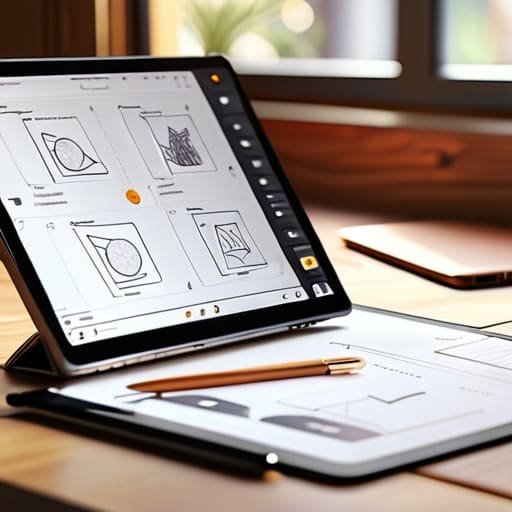
I was sitting at my desk last night, the smell of machine oil from a half-disassembled Leica lingering in the air, when I realized how much we’ve lost in the rush toward “seamlessness.” We’ve become obsessed with removing every ounce of resistance from our digital lives, treating user experience design as if its only job is to make everything disappear into a frictionless void. But when you strip away the weight and the texture, you aren’t making things easier; you’re making them hollow. We’ve traded the satisfying click of a well-built tool for a series of ghostly, weightless swipes that leave the user feeling strangely disconnected from their own work.
I’m not here to sell you on the latest trend or a suite of automated shortcuts that promise to do your thinking for you. Instead, I want to talk about how we can bring intentionality back to the screen. Over the next few sections, I’m going to share what I’ve learned from twenty years of shifting from physical paste-ups to digital pixels: how to design interfaces that respect the human hand and empower the creator rather than just automating them into submission.
Table of Contents
- Honoring the Human Touch Through User Research Methodologies
- Reducing Cognitive Load in Interface Design to Respect Intent
- Five Ways to Protect the Craft in Your UX Workflow
- Designing for Intent, Not Just Interaction
- The Illusion of Seamlessness
- The Path Forward: Designing with Intention
- Frequently Asked Questions
Honoring the Human Touch Through User Research Methodologies

When we talk about user research methodologies, it’s easy to get lost in the data—the heatmaps, the click rates, and the endless spreadsheets. But if we treat people as mere data points, we’ve already lost the essence of what we’re trying to build. I’ve found that the most profound insights don’t come from a dashboard; they come from watching a person struggle with a menu or seeing the hesitation in their eyes when a layout feels cluttered. We need to move beyond mere observation and toward true empathy.
To do this, we must integrate a more tactile approach into our user-centered design process. Instead of rushing toward high-fidelity screens, I often find value in returning to paper. There is a specific kind of clarity that comes from sketching out a flow by hand. This stage of prototyping and wireframing allows us to test the logic of an interaction before we ever worry about the polish. By slowing down and focusing on the human intent behind the action, we ensure that our digital tools feel less like obstacles and more like natural extensions of the creator’s hand.
Reducing Cognitive Load in Interface Design to Respect Intent

When we talk about efficiency, we often fall into the trap of thinking “faster is better.” But in my experience, a high-speed interface that leaves a user feeling frantic isn’t a success; it’s a failure of empathy. To truly respect a creator’s intent, we have to address cognitive load in interface design by stripping away the non-essential. It’s about creating breathing room. Just as I wouldn’t crowd a page with too many typefaces, we shouldn’t crowd a workspace with too many competing calls to action.
Every unnecessary icon or redundant notification acts as a micro-distraction, pulling the user away from their actual flow. During my time in prototyping and wireframing, I’ve learned that the most elegant solutions are often the ones that disappear. We aren’t just building layouts; we are managing the user’s mental energy. By prioritizing clarity over cleverness, we ensure that the tool remains a quiet partner in their process, rather than a loud, demanding presence that demands constant attention.
Five Ways to Protect the Craft in Your UX Workflow
- Prioritize meaningful friction. Not every interaction should be a frictionless slide toward a conversion; sometimes, a deliberate pause—a confirmation or a moment of reflection—respects the user’s agency and prevents mindless clicking.
- Design for the periphery. A good interface doesn’t just command the center of the screen; it acknowledges the context of the person using it, whether they are working in a quiet studio or a chaotic transit hub.
- Treat typography as a structural element, not an afterthought. Type carries the weight of your brand’s voice; if the hierarchy is broken, the user’s mental model of the task will collapse along with it.
- Build for longevity, not just for the current trend cycle. Avoid the temptation to chase every new aesthetic whim; instead, lean into principles of clarity and utility that will remain legible long after the current design trend has faded.
- Validate through observation, not just data. A heat map can tell you where a cursor hovered, but it won’t tell you the frustration in a user’s eyes or the hesitation in their hands. Get back to watching how real people actually struggle with your work.
Designing for Intent, Not Just Interaction
True UX isn’t about removing every ounce of resistance; it’s about ensuring that the friction a user encounters is meaningful and serves to ground their intentions.
We must move beyond optimizing for sheer engagement metrics and start designing for the quality of the human experience, prioritizing clarity over clutter.
The most successful interfaces act as quiet companions to the creator, providing the necessary tools to execute a vision without getting in the way of the craft.
The Illusion of Seamlessness
We often mistake frictionless design for good design, but true user experience isn’t about removing every moment of thought; it’s about ensuring that when a user pauses, they are pausing to create or decide, not because they are lost in a digital maze.
Ingrid Bellamy
The Path Forward: Designing with Intention

Ultimately, great user experience design isn’t about how many features we can cram into a single viewport or how quickly we can automate a user’s journey. It’s about the quiet strength found in intentionality. By grounding our work in deep human research and being disciplined enough to reduce cognitive load, we move away from mere digital decoration and toward true utility. We must remember that every pixel we place and every interaction we engineer should serve a specific purpose, honoring the way people actually think and move through their digital lives rather than forcing them to adapt to our shortcuts.
As we look toward an increasingly automated future, my hope is that we don’t lose the soul of the craft in the pursuit of seamlessness. Technology should act as a bridge, not a barrier, between a person and their creative goals. Let’s commit to building interfaces that don’t just work, but actually respect the user’s agency and dignity. When we design with empathy and a respect for human friction, we aren’t just making tools; we are building a digital landscape that feels as meaningful and tactile as a well-worn sketchbook.
Frequently Asked Questions
How can we balance the push for seamless, frictionless automation with the need to maintain a sense of human agency in our interfaces?
We’ve become obsessed with “frictionless” design, but total smoothness often leads to a loss of control. When an interface anticipates every move, the user becomes a passenger rather than a pilot. To maintain agency, we must design “meaningful friction”—moments where the system pauses to ask for intent. Don’t automate the soul out of the process; instead, build tools that act as sophisticated extensions of the hand, leaving the final, decisive stroke to the human.
In an era of rapid prototyping, what are the practical ways to ensure that deep, qualitative research doesn't get sacrificed for speed?
We’ve become addicted to the “fail fast” mantra, but speed shouldn’t mean shallow. To keep depth in the mix, I integrate small, focused ethnographic observations into the prototyping cycle itself. Instead of massive, sweeping studies, I look for “micro-moments” of friction during testing. It’s about slowing down just enough to ask why a user hesitated, rather than just noting that they did. Don’t let the sprint outpace the soul of the work.
How do we design digital systems that feel intentional and crafted rather than just being another collection of optimized, algorithmically driven patterns?
We have to stop designing for “engagement metrics” and start designing for agency. To move beyond algorithmic patterns, we must reintroduce purposeful friction—those small, intentional moments that allow a user to pause and think rather than just react. This means prioritizing bespoke typography, thoughtful spacing, and micro-interactions that feel tactile. When we design with the same care I use to calibrate a vintage Leica, we create systems that feel humanly crafted, not just mathematically solved.
