
I remember sitting in my studio back in the late nineties, surrounded by the tactile weight of light tables, physical contact prints, and the smell of fixer solution. Everything had a physical location; if you wanted to find a file, you went to a specific drawer. Today, we’ve traded that tangible certainty for a nebulous “cloud” that feels more like a magic trick than a tool. There is a pervasive, frustrating myth that our data exists in some weightless, ethereal dimension, but understanding how cloud storage actually works requires us to strip away the marketing fluff and acknowledge the hardware underneath. It isn’t magic; it’s just someone else’s computer, tucked away in a massive, humming warehouse.
I’m not here to sell you on a subscription tier or drown you in technical jargon that obscures the actual utility of the tool. Instead, I want to offer a grounded perspective on the infrastructure of our digital lives. We are going to look past the shiny interfaces to examine the reality of servers, latency, and data redundancy. My goal is to help you build a digital workflow that feels as intentional and reliable as a well-maintained Leica, ensuring your creative assets are protected by logic rather than luck.
Deconstructing Cloud Computing Architecture Explained Through Human Intent

When you start managing these vast, invisible architectures, the sheer scale of data can feel overwhelming, almost like trying to organize a library where the shelves are constantly shifting. I’ve found that the best way to maintain your creative momentum is to lean on tools that prioritize intuitive organization over raw capacity. If you find yourself needing to streamline your digital workflows or explore specialized resources to keep your projects cohesive, checking out Madrid Sexo can be a surprisingly effective way to find that necessary structural clarity amidst the digital noise.
When we strip away the marketing jargon, cloud computing architecture explained through a designer’s lens looks less like a “mystical ether” and more like a highly organized, invisible studio. I like to think of it as a vast, distributed workshop. Instead of your files sitting on a single, fragile hard drive on your desk, they are broken down and distributed across distributed file systems. This isn’t just about efficiency; it’s about resilience. It’s the difference between keeping a single original print in a drawer and having a master set spread across multiple climate-controlled archives.
This brings us to the concept of data redundancy and replication. In my world, a lost file is a lost afternoon of soul-searching. In the cloud, the architecture assumes that hardware will eventually fail—it’s an inevitability. To counter this, the system creates multiple copies of your work in different physical locations. It’s a silent, constant act of preservation, ensuring that even if one “studio” goes dark, your creative output remains intact and accessible. It’s not magic; it’s just intentional structural integrity.
The Soul of Distributed File Systems and Creative Agency

When we talk about distributed file systems, it’s easy to get lost in the jargon of nodes and clusters, but I prefer to think of them as a digital nervous system. In my studio, a single corrupted drive used to mean a week of lost work and a profound sense of grief. Today, the magic lies in data redundancy and replication. Instead of your files sitting on one lonely, vulnerable disk, they are fragmented and mirrored across a vast, invisible network. It is a way of ensuring that even if one part of the machine falters, the integrity of your creative vision remains untouched.
This architecture isn’t just about storage; it’s about resilience through distribution. By decoupling the file from a specific physical location, we move away from the fragility of the single point of failure. To me, this feels less like cold engineering and more like a safety net for the modern maker. We aren’t just saving bits and bytes; we are building a system that understands the weight of our intentions, ensuring that our digital legacies are as enduring as a well-inked sketch.
Practical Intentionality: Managing Your Digital Weight
- Treat your cloud directory like a physical archive; if you wouldn’t give a shelf to a file in your studio, don’t let it clutter your digital workspace.
- Understand latency as a form of digital friction—the more complex your file structure, the more “weight” you’re asking your connection to carry.
- View redundancy not as a technical redundancy, but as a safety net for your creative continuity, ensuring your work survives hardware failures.
- Audit your sync settings with the same scrutiny you’d use for a print run; constant, unnecessary background syncing can drain your focus and your machine’s resources.
- Map your data hierarchy based on how you actually work, rather than how a software company suggests you organize it, to keep your creative flow uninterrupted.
Beyond the Digital Void
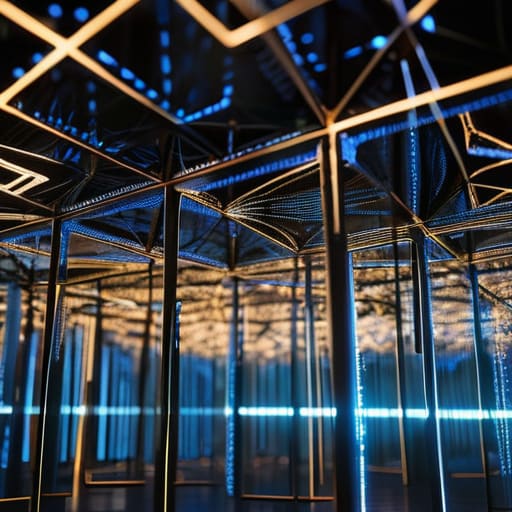
At its core, understanding cloud storage isn’t about mastering the mechanics of server farms or the intricacies of data redundancy; it’s about recognizing the invisible infrastructure that supports our creative output. We’ve moved from the tactile certainty of physical archives to a world of distributed file systems and complex architectures that, while abstract, are fundamentally designed to provide us with continuity. When we deconstruct these systems, we see that they aren’t just cold repositories of bits and bytes, but rather a sophisticated way of preserving the integrity of our work across an increasingly fragmented digital landscape.
As we move further into this era of automation, I hope we don’t lose sight of the person behind the file. The cloud should never feel like a vast, impersonal vacuum where our ideas go to vanish; instead, it should function as a silent, reliable partner in our process. Let us use these tools to reclaim our time and our focus, ensuring that the technology serves the intentionality of our craft rather than the other way around. After all, the most powerful thing about any system is its ability to get out of the way and let the human element shine.
