
I remember sitting at my drafting table in Providence, surrounded by the scent of isopropyl alcohol and dried glue, staring at a pile of high-end resin kits that promised “perfection.” There is this pervasive, expensive myth in the hobbyist community that you need a laboratory of specialized tools and a massive budget to achieve something meaningful. But honestly? Most of those hyper-polished, kit-bashed scenes feel hollow. When we talk about different approaches to building miniature dioramas, we often get distracted by the gear instead of focusing on the soul of the scene. I’ve learned that a piece of weathered scrap wood often tells a far more compelling story than a factory-perfect plastic component ever could.
I’m not here to sell you on a lifestyle of endless consumption or complex, automated workflows. Instead, I want to share the practical, tactile methods I’ve honed over years of working with my hands—methods that prioritize intentionality over instruction manuals. We are going to explore several grounded approaches to building miniature dioramas that favor texture, grit, and the beauty of imperfection. My goal is to help you move past the “perfect” scale and start building worlds that actually feel lived-in.
Honoring the Human Touch With Diorama Materials and Tools
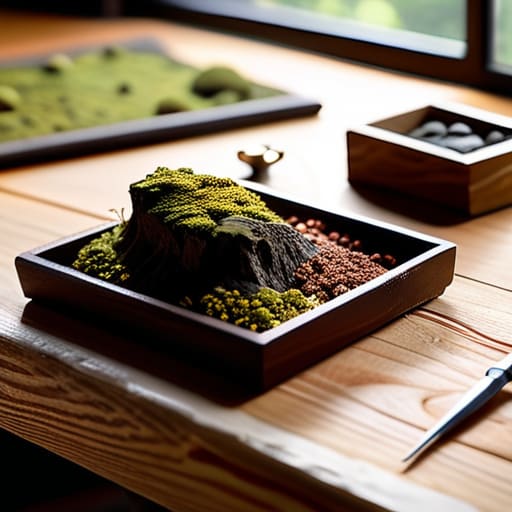
When I’m at my desk, whether I’m sketching a new typeface or tinkering with a Leica, I’m always looking for the soul in the object. The same applies to your workspace when you’re selecting diorama materials and tools. It is easy to lean on mass-produced, injection-molded plastics that feel sterile and lifeless. While they offer convenience, they often lack the weight and texture that make a scene feel real. I prefer seeking out raw, tactile elements—real wood grains, actual stone dust, or even dried organic matter—that invite a sense of history.
The real magic happens during the transition from construction to character. This is where weathering techniques for dioramas move beyond mere decoration and become a form of storytelling. You aren’t just adding “dirt”; you are documenting the passage of time. A subtle wash of pigment in a corner or a slight scuff on a miniature doorframe suggests a world that existed long before you began your work. By embracing these controlled imperfections, you move away from the uncanny valley of “perfect” models and toward a finished piece that feels genuinely lived-in.
Mastering Miniature Landscape Fabrication for Purposeful Design
When we move from the structural bones of a diorama to the actual terrain, it is easy to fall into the trap of “perfect” symmetry. In my design work, I’ve learned that perfection is often the enemy of character. The same applies to miniature landscape fabrication. If you are building a forest floor or a rocky outcrop, avoid the urge to make every stone look like it was placed by a machine. Instead, think about the geological history of the space. Layer your textures—use real organic matter, fine powders, and varied aggregates—to create a sense of depth that suggests time has passed.
The true soul of the piece emerges during the final stages of scenic painting for miniatures. This isn’t just about applying color; it’s about layering history through subtle weathering techniques for dioramas. A wash of diluted umber in the crevices of a rock or a light dusting of pigment on a weathered wooden beam mimics the way light and shadow actually interact with the world. We aren’t just decorating a surface; we are telling a story of erosion, moisture, and life.
The Discipline of Detail: Five Principles for Intentional Miniature Construction
- Embrace the beauty of controlled imperfection. A perfectly smooth surface is a dead surface; use fine-grit sandpaper or a dry brush to introduce the subtle textures and “scars” that suggest a history of use.
- Curate your palette with restraint. Just as in typography, too many competing elements create visual noise. Choose a limited color story for your terrain to ensure the focal points of your narrative actually stand out.
- Think in layers, not just surfaces. A compelling diorama has depth—both physical and conceptual. Build from the bedrock up, ensuring that every layer of soil, moss, or debris serves to ground the scene in reality.
- Respect the scale of light. The way shadows fall across your miniature landscape dictates the mood. Use localized lighting or strategically placed textures to control how light interacts with your scene, avoiding the flat look of generic kits.
- Let the narrative drive the construction. Before you pick up your tweezers, ask yourself what story this space tells. Every misplaced pebble or weathered plank should feel like a deliberate choice that supports the central theme of your work.
The Soul in the Small Scale
Ultimately, building a diorama is less about achieving technical perfection and more about the intentionality of your choices. We have explored how selecting materials that mimic natural textures and carefully fabricating landscapes can transform a mere collection of plastic and glue into something that breathes. Whether you are focusing on the tactile grit of a weathered stone or the subtle topography of a hillside, remember that every decision should serve the broader narrative of your piece. It isn’t about following a rigid blueprint; it is about mastering the balance between structural precision and the organic chaos that defines our real world.
As you step away from your workbench and look at your finished creation, I hope you see more than just a miniature scene. I hope you see the fingerprints of your own process. In a world that is increasingly obsessed with the seamless and the automated, there is a profound, quiet dignity in making something that feels deliberately imperfect. Don’t be afraid of the slight smudge of paint or the uneven edge of a tiny leaf. Those are the marks of a creator. Keep building, keep refining, and most importantly, never lose sight of the human hand that brings these tiny worlds to life.
When you finally move from the planning phase to the actual assembly, the sheer volume of technical details can feel overwhelming, almost like staring at a blank canvas without a grid. I’ve found that the best way to navigate these complex creative transitions is to lean into community-driven insights rather than trying to solve every structural problem in isolation. If you find yourself needing a space to decompress or perhaps find a different kind of connection during those long, solitary hours at the workbench, engaging with a community through Womenseekingmen chat can offer a much-needed social counterbalance to the intense, quiet focus required for such meticulous work. It’s about finding that rhythmic balance between the solitary discipline of the craft and the human need for connection.
