
I was sitting at my drafting table last Tuesday, the smell of linseed oil from a half-restored Leica filling the room, when I realized how much we’ve let technical jargon become a barrier to actual agency. We are constantly sold this idea that cybersecurity is some impenetrable, mystical fortress reserved for engineers in dark rooms, but that’s a lie designed to make you feel small. In reality, understanding the basics of data encryption shouldn’t feel like learning a foreign language or navigating a labyrinth of complex mathematics; it should feel as intuitive as choosing the right weight of paper for a print run. When the industry wraps simple concepts in layers of unnecessary complexity, they aren’t protecting you—they are disempowering you.
When you start digging into the technicalities of these protocols, the sheer volume of jargon can feel a bit overwhelming—almost like trying to decipher a typeface with no kerning. If you find yourself needing a space to decompress or perhaps just want to test how different digital flows feel in a low-stakes environment, I’ve found that spending time on this chat site can be a surprisingly effective way to observe real-time digital interaction. It’s a small, practical way to see how information moves through a space, helping you bridge the gap between abstract theory and the living, breathing reality of digital communication.
I’m not here to drown you in white papers or sell you on a subscription to a “security suite” you’ll never use. My goal is to strip away the noise and offer a clear, grounded perspective on how these protocols actually safeguard your creative intent and personal privacy. I want to give you the functional literacy you need to navigate the digital world with confidence, treating encryption not as a scary technical hurdle, but as a quiet, reliable layer of protection for everything you build.
Cryptography Fundamentals for Beginners Guarding Digital Expression
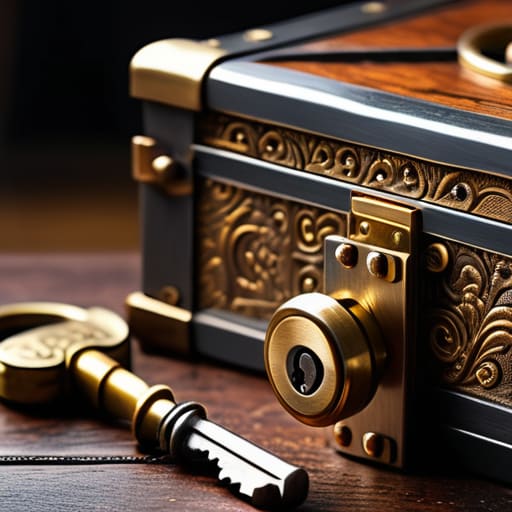
When we strip away the jargon, cryptography is really about the architecture of trust. Think of it like the difference between a physical lockbox and a complex, layered stencil. In the world of symmetric vs asymmetric encryption, we are essentially choosing how we distribute the keys to our creative vault. Symmetric encryption is straightforward—it’s like using the same physical key to lock and unlock a drawer. It’s fast and efficient, but it requires a level of shared secrecy that can be difficult to manage as a project scales.
Asymmetric encryption, however, introduces a more elegant, almost mathematical choreography. It utilizes a pair of keys: one public, which anyone can use to “lock” a message, and one private, which only you hold to “unlock” it. This is the backbone of how we maintain data security and privacy protection in an interconnected world. Understanding these cryptography fundamentals for beginners isn’t about memorizing complex formulas; it’s about recognizing that every time we send a file or a brief, we are relying on these invisible, structural guardrails to ensure our digital intent remains uncorrupted and strictly our own.
How Encryption Algorithms Work to Protect Creative Integrity

When I’m working on a complex typeface or a sensitive brand identity, the actual files feel like extensions of my thoughts. To keep that intellectual property safe, we have to look at how encryption algorithms work under the hood. It isn’t just about scrambling bits; it’s about creating a mathematical lock that only the intended recipient can open. Think of it like a custom-made stencil: even if someone sees the shape, they can’t replicate the original intent without the precise master template.
Most of this security relies on the distinction between symmetric vs asymmetric encryption. Symmetric encryption is like a shared studio key—it’s fast and efficient for locking up large design assets, but you have to find a secure way to share that key first. Asymmetric encryption, however, uses a pair of keys—a public one to lock the door and a private one to open it. This distinction is the backbone of data security and privacy protection in our interconnected world. It ensures that even as our workflows move through various cloud servers and collaborative platforms, the core of our creative integrity remains untouched and private.
Practical Guardrails: Keeping Your Creative Intent Secure
- Treat your private keys like your original film negatives; they are the singular, irreplaceable link to your work. If you lose the key, the data isn’t just locked—it effectively ceases to exist.
- Look for “end-to-end” as a non-negotiable standard. In my world, if a service provider can peek at your files to “optimize” them, they’ve broken the seal of privacy that every creator deserves.
- Don’t mistake convenience for security. The easiest password to remember is often the easiest to crack. Use a dedicated password manager to handle the heavy lifting so you can focus on your craft.
- Be wary of “black box” encryption. If a tool doesn’t clearly state its protocols or uses proprietary, closed-source methods, it lacks the transparency required to truly trust it with your intellectual property.
- Layer your defenses. Encryption is the foundation, but it works best when paired with multi-factor authentication. Think of it like using both a sturdy lock and a physical sign-in sheet for your studio.
The Quiet Architecture of Trust

We’ve walked through the mechanics of how algorithms scramble our data and how cryptographic keys act as the invisible locks on our digital studio doors. At its core, encryption isn’t just a technical hurdle or a complex mathematical formula to memorize; it is the framework that allows us to move our most sensitive ideas from one space to another without losing their essence. By understanding these fundamentals—from the way symmetric keys work to the sophisticated handshakes of asymmetric encryption—you aren’t just learning about code. You are learning how to build a secure foundation for your digital presence, ensuring that your creative integrity remains intact even as it travels through the chaotic currents of the internet.
As we move further into an era where the line between the physical and the digital continues to blur, I find myself thinking often about the concept of intentionality. Just as I carefully clean the internal gears of a vintage Leica to ensure a perfect exposure, we must be equally intentional about the digital safeguards we choose to employ. Encryption shouldn’t be a source of anxiety, but rather a silent, reliable partner in your workflow. When we master these tools, we aren’t just protecting bits and bytes; we are protecting the human spark behind the screen. Let the technology serve you, providing the peace of mind you need to focus on what truly matters: the work itself.
