
I remember sitting in a dim studio back in the late nineties, surrounded by the smell of ozone and chemical developer, staring at a contact sheet that felt utterly lifeless. I had spent hours meticulously composing a shot, only to realize that my lack of control over the depth of field had rendered the entire frame a muddy, indistinct mess. It wasn’t a lack of expensive gear that failed me; it was a failure to understand how to direct the eye. We often treat focus like a binary switch—either everything is sharp or everything is a blur—but that’s a lazy way to look at visual storytelling.
In this piece, I’m not going to bore you with a mathematical lecture on aperture diameters or sensor physics. Instead, I want to talk about the intentionality behind the lens. I’m going to share how you can use focus to create a hierarchy of information, ensuring your subject doesn’t just sit in a frame, but actually commands it. We’re going to move past the technical jargon and focus on how to use depth of field as a tool for meaningful, human-centered composition.
Table of Contents
The Aperture and Depth of Field Relationship as Creative Choice
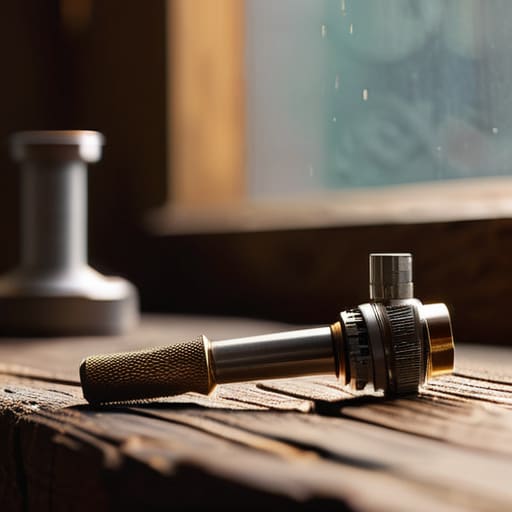
When I’m hunched over my workbench, cleaning the internal gears of an old Leica, I’m reminded that every mechanical adjustment is a deliberate decision. The same applies to your lens. Understanding the aperture and depth of field relationship isn’t just about memorizing numbers on a dial; it’s about deciding how much of the world you want to allow into the frame. When you dial in a wide aperture, you aren’t just “blurring the background”—you are stripping away the noise to force a confrontation between the viewer and your subject.
Choosing between a shallow vs deep depth of field is where your narrative intent takes shape. A wide-open aperture creates that creamy, isolated look that feels intimate, almost tactile, but it demands precision. If your focus is off by a fraction, the entire emotional weight of the shot collapses. Conversely, stopping down to a smaller aperture allows for a more expansive, environmental context. It’s about finding that sweet spot where the technical settings serve the story, rather than letting the gear dictate the composition.
Shallow vs Deep Depth of Field Choosing Purposeful Focus

When I’m out with my Leica, I find myself constantly weighing the emotional weight of what I’m looking at. Choosing between shallow vs deep depth of field isn’t just a technical checkbox; it’s a decision about where you want the viewer to live within the frame. A shallow field—that creamy, isolated look—is incredibly powerful for portraiture or capturing the minute textures of a weathered object. It forces a sense of intimacy, stripping away the noise of the world to leave only the subject. However, there is a danger in overusing it; if everything is blurred, you risk losing the contextual soul of the image.
On the other hand, a deep field demands a different kind of discipline. When I want to document a landscape or a complex architectural space, I lean into a wider range of clarity. This isn’t about making everything sharp just for the sake of it; it’s about controlling background blur to ensure the environment tells a story alongside the subject. Whether you are navigating f-stop settings for photography or considering how your sensor size and depth of field interact, remember that clarity should always serve the narrative, not just the resolution.
Five Ways to Use Focus as a Design Tool
- Stop treating bokeh like a filter. Instead of using a shallow depth of field just to mask a cluttered background, use it to create a visual hierarchy that tells the viewer exactly where to look first.
- Mind the transition zones. A common mistake is a focus jump that feels jarring. I always look for a gradual fall-off; the way the sharpness dissolves into softness is where the actual soul of the image lives.
- Respect the context of the subject. If you’re shooting a textured object—something with its own tactile history, like an old Leica or a weathered book—don’t blur away the very details that give it character.
- Use deep focus to establish a sense of place. Sometimes, the environment is just as much a character as the subject. Don’t be afraid to stop down and let the surroundings breathe, providing the narrative weight the shot needs.
- Watch your plane of focus. It isn’t always a flat line. When working with macro or close-up subjects, remember that the depth is thin; if your intention is to honor the craftsmanship of a detail, ensure your focus is surgically precise.
The Intentionality of Focus
Stop treating depth of field as a technical setting to be “fixed” and start treating it as a compositional tool that dictates where your viewer’s eye is allowed to rest.
Mastery lies in the tension between the subject and its environment; a shallow depth of field should isolate a moment, while a deep one should contextualize it.
Before you reach for your aperture ring, ask yourself what part of the story deserves the clarity and what parts are meant to remain a soft, supporting memory.
The Intent Behind the Focus
Depth of field isn’t just a technical setting on a lens; it’s a way of deciding what deserves our attention. When we blur a background, we aren’t just obscuring detail—we are making a deliberate choice to honor the subject and guide the viewer’s eye with intention.
Ingrid Bellamy
Beyond the Technicalities

At the end of the day, mastering depth of field isn’t about memorizing the math behind your aperture or knowing which f-stop yields the sharpest edge. It is about understanding the narrative weight of what you choose to reveal and what you choose to obscure. Whether you are opting for a razor-thin slice of focus to isolate a single, poignant detail or embracing a deep plane of clarity to document an entire environment, your decision should be a deliberate one. Don’t let the gear make the choice for you; instead, use these optical tools to anchor the viewer’s attention exactly where the story demands it to be.
As I sit here with my sketchbook, I’m often reminded that the most impactful designs—and photographs—are those that respect the viewer’s eye. We live in an era of digital perfection where everything can be artificially sharpened or smoothed with a single click, but there is a profound beauty in the intentionality of imperfection. Use depth of field to honor the subject’s true intent, not just to mask a lack of composition. When you stop treating focus as a setting and start treating it as a form of visual dialogue, you move from merely capturing an image to actually composing a moment.
Frequently Asked Questions
How do I maintain a sense of intentionality when the depth of field feels accidental or messy?
When the focus feels accidental, it’s usually because you’ve lost control of the plane of sharpness. To fix this, stop treating aperture as a setting and start treating it as a compositional tool. Check your distance to the subject and your focal length; sometimes a wider lens is actually your friend for maintaining clarity. If the blur feels “messy,” it’s likely because it’s competing with your subject rather than cradling it. Refine your placement to ensure the transition from sharp to soft feels earned.
Is there a way to balance sharp focus with a soft background without losing the tactile texture of the subject?
It comes down to managing your light and your distance. If you’re chasing that creamy bokeh but the subject feels “plastic,” you’re likely overcompensating with a wide aperture. Try stopping down just a hair—move from f/1.8 to f/2.8 or f/4. This keeps the micro-contrast of the textures intact. Also, watch your lighting; side-lighting emphasizes the physical grit and tactile details that a flat, bright light tends to wash away.
At what point does a shallow depth of field stop being a creative tool and start becoming a distraction from the composition?
It becomes a distraction the moment the blur starts fighting the subject rather than supporting it. If you’re using a wide aperture to isolate a detail, but the bokeh is so aggressive it swallows the context or creates distracting shapes in the background, you’ve lost the narrative. A shallow depth of field should feel like a spotlight, not a veil. If the eye can’t find a clear place to rest because the “artistic” blur is too loud, you’ve prioritized technique over intent.
